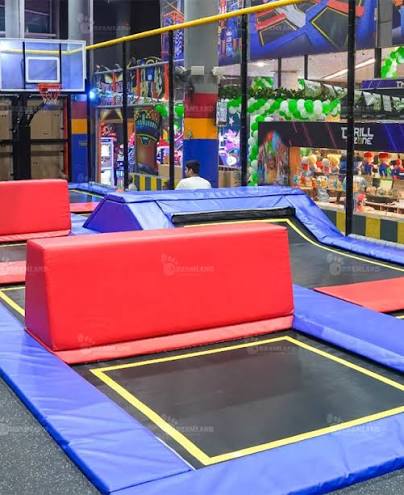
Opening an indoor trampoline park is an exciting business opportunity, but choosing the right equipment is one of the most important decisions you will indoor trampoline park equipment make. The quality, design, safety, and variety of your attractions can directly influence visitor satisfaction, repeat customers, operating costs, and your park’s long-term success. With many manufacturers and equipment options available, business owners need to carefully evaluate their choices before making an investment.
Selecting suitable indoor trampoline park equipment requires more than choosing attractions that look exciting. You need to consider your available space, target visitors, safety requirements, maintenance needs, budget, and overall business concept. A well-planned equipment selection can help create an engaging environment while supporting efficient daily operations.
Understand Your Business Concept
Before purchasing any equipment, clearly define what you want your trampoline park to offer. Some parks focus primarily on traditional trampolines and recreational jumping, while others combine trampolines with obstacle courses, climbing attractions, dodgeball areas, foam pits, and interactive activities.
Think about your target audience as well. If your main customers are families with young children, you may need age-appropriate attractions with controlled activity areas. If teenagers and young adults are your primary audience, more challenging obstacle courses and advanced jumping attractions may be suitable.
Your business concept should guide every equipment decision. Avoid purchasing attractions simply because they are popular elsewhere. Instead, select equipment that matches your customers and creates a consistent experience throughout the park.
Measure and Plan Your Available Space
Space planning is another essential factor when selecting trampoline park equipment. Before contacting manufacturers, accurately measure the building and identify important features such as columns, entrances, emergency exits, ceilings, support structures, and utility areas.
The available floor area and ceiling height will determine which attractions can be installed safely. Equipment should also be arranged to provide comfortable movement between different activity zones. Crowded layouts can make the park feel uncomfortable and may create unnecessary operational challenges.
A professional manufacturer should be able to provide layout assistance based on your facility dimensions. Ask for detailed designs or three-dimensional planning materials so you can understand how different attractions will fit together before production begins.
Prioritize Safety and Quality
Safety should always be one of the highest priorities when purchasing equipment. Trampoline parks involve active movement, jumping, climbing, and physical challenges, so equipment must be designed and manufactured with appropriate safety considerations.
Look for equipment constructed from durable materials and designed with suitable padding, protective surfaces, secure connections, and appropriate barriers. Ask potential manufacturers about their quality-control procedures and the standards their products are designed to meet.
Do not choose equipment based solely on the lowest price. Poor-quality materials can increase maintenance costs and create operational problems. Investing in well-designed equipment from an experienced manufacturer can provide better long-term value.
Choose a Reliable Manufacturer
The manufacturer you select can be just as important as the equipment itself. A reliable supplier should have experience designing and producing trampoline park attractions for commercial facilities.
Research the manufacturer’s background, previous projects, production capabilities, and customer feedback. Ask to see examples of completed parks and, where possible, speak with previous customers about their experience.
A dependable manufacturer should communicate clearly throughout the project. They should be able to answer questions about design, materials, installation, maintenance, replacement parts, and after-sales support.
Evaluate Equipment Variety
A successful trampoline park usually benefits from offering different activities rather than relying on one type of attraction. A variety of equipment can encourage visitors to explore the entire facility and spend more time inside the park.
Depending on your concept and available space, you might consider interconnected trampolines, trampoline basketball, dodgeball courts, foam pits, airbag landing zones, obstacle courses, climbing walls, ninja-style challenges, and interactive attractions.
However, variety should not mean filling every available space with equipment. Each attraction should have a clear purpose and contribute to the overall visitor experience.
Consider Durability and Maintenance
Commercial trampoline parks can experience heavy daily use, particularly during weekends, holidays, and school vacations. Equipment therefore needs to withstand frequent activity without requiring constant repairs.
Ask manufacturers about the expected lifespan of major components and which parts are most likely to require replacement. Find out whether replacement mats, padding, springs, safety nets, and other components are readily available.
Maintenance requirements should also be considered before purchasing. Equipment that is simple to inspect, clean, repair, and replace can help reduce downtime and operating expenses.
Compare Prices and Total Value
Budget is naturally an important consideration, but the cheapest equipment is not always the best investment. Instead of comparing only the initial purchase price, consider the total value of each option.
Calculate equipment costs alongside shipping, installation, staff training, maintenance, replacement parts, and potential future upgrades. A higher-quality system may cost more initially but could provide better durability and lower maintenance expenses over time.
Request detailed quotations from several manufacturers. Compare what each quotation includes, including design services, installation assistance, warranties, spare parts, and after-sales support.
Check Installation and After-Sales Support
Installing a large trampoline park requires careful planning and professional execution. Ask the manufacturer whether they provide installation services or technical guidance during the installation process.
Good after-sales support can become extremely valuable once your park begins operating. Even well-made equipment may eventually require adjustments, repairs, replacement components, or technical assistance.
Before signing an agreement, understand the warranty terms and support procedures. Find out how quickly the manufacturer can respond to problems and whether replacement parts can be ordered easily.
Think About Visitor Experience
Equipment should not only be safe and durable; it should also be exciting and visually appealing. Visitors are more likely to enjoy a park when attractions provide different levels of challenge and encourage participation.
Consider how customers will move from one activity to another. Create areas where beginners can participate comfortably while providing more challenging attractions for experienced visitors.
A well-designed combination of activities can also encourage repeat visits because customers may discover something new each time they return.
Plan for Future Expansion
Your first equipment purchase does not necessarily have to define your park forever. If possible, select a layout that allows future attractions or upgrades to be added.
Modular equipment can make expansion easier because individual sections may be modified or replaced without completely redesigning the facility. This flexibility can be useful as your customer preferences and business needs change.
Planning for future growth from the beginning can help you avoid expensive redesigns later.
Make a Careful Final Decision
Choosing the best indoor trampoline park equipment requires careful research and planning. Start by defining your business concept, understanding your available space, and identifying your target customers. Then evaluate manufacturers based on safety, quality, experience, durability, equipment variety, pricing, installation services, and after-sales support.
Remember that your equipment is a long-term investment in your business. The right attractions can create an exciting visitor experience, improve customer satisfaction, and support your park’s reputation. By choosing reliable equipment and a trustworthy manufacturing partner, you can build an indoor trampoline park that is enjoyable for visitors and practical to operate.
Ultimately, the best equipment is not simply the most expensive or the most visually impressive option. It is the equipment that combines safety, durability, functionality, visitor appeal, and long-term value while fitting your specific business goals. Careful selection at the beginning can make a significant difference to the success and sustainability of your indoor trampoline park.