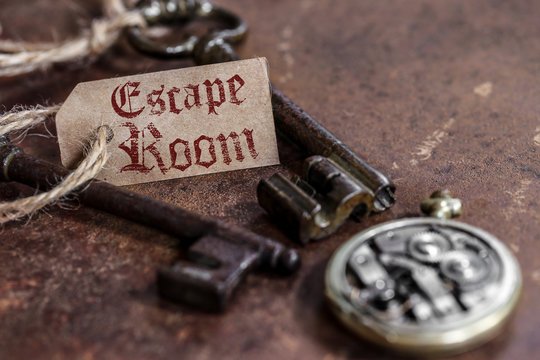
In an era dominated by digital screens and remote communication, finding activities that genuinely bring people together can be a challenge. Whether for corporate team-building, a night out with friends, or a family gathering, few experiences rival the thrill, immersion, and camaraderie of an escape room. Stepping into a locked, themed environment with a ticking clock instantly transforms a group of individuals into a unified task force. Rather than relying on mundane trust falls or repetitive icebreakers, an escape room immerses participants in a high-stakes narrative where collaboration is the only key to victory.
Why Escape Rooms Are the Ultimate Catalyst for Collaboration
The magic of an escape room lies in its ability to strip away everyday hierarchies and social barriers. When the door clicks shut and the countdown begins, job titles and daily routines fade into the background. Everyone enters the game on equal footing, united by a single, urgent objective.
Unlike traditional group activities where one or two extroverts might dominate the conversation, a well-designed escape room requires diverse perspectives. The physical environment is packed with hidden clues, cryptic riddles, and tactile mechanisms that no single person can solve alone. Success depends entirely on how effectively the group pools its collective intelligence, shares discoveries, and adapts to unexpected twists under pressure.
Types of Escape Room Challenges That Spark Teamwork
Game designers craft specific obstacles intended to force players out of their silos and into active partnership. Here are the most effective challenges that turn ordinary groups into cohesive teams.
Multi-Layered Logic Puzzles
Logic puzzles are the backbone of any great escape room, but the ones that truly elevate teamwork are multi-layered. In these scenarios, one player might hold a cipher wheel, another might have discovered a sequence of symbols hidden behind a painting, and a third might be decoding a journal entry. Neither piece of information makes sense in isolation. Players must verbally piece together their findings, cross-reference data, and verify each other’s deductions to crack the final code.
Physical Coordination and Spatial Tasks
Not every obstacle is purely cerebral; many require synchronized physical action. Some rooms feature pressure plates on opposite sides of a space that must be depressed simultaneously to unlock a secret compartment. Others involve maneuvering a magnetic key through a transparent maze on one wall while a teammate gives directions from the other side. These tasks demand clear, concise communication and spatial awareness, proving that physical coordination is just as vital as mental agility.
Time-Pressured Scavenger Hunts
The initial moments inside an escape room often involve a frantic, exhilarating search for hidden objects. Keys tucked inside false-bottomed drawers, ultraviolet flashlights concealed under rugs, and torn map fragments scattered across bookshelves require systematic division of labor. If everyone searches the same corner, precious minutes slip away. Teams quickly learn to divide the room into zones, call out every item they find, and maintain a central “discard pile” for used clues so nobody wastes time re-solving an already completed step.
Communication-Barrier Obstacles
Some of the most memorable escape room moments occur when players are physically separated. A team might begin the game split between two adjacent cells, separated by a barred wall or a glass partition. One side might have access to the controls, while the other side can see the puzzle board. Overcome with adrenaline, players must master the art of active listening and precise description. Learning to convey complex visual patterns using only words builds an immediate, lasting bond of trust.
Narrative-Driven Moral Dilemmas and Twist Endings
Modern escape rooms have evolved far beyond simple lock-and-key mechanics, incorporating rich storytelling and branching narratives. Near the climax of the game, teams may encounter a scenario that requires a collective strategic decision, such as choosing which artifact to secure before time runs out or deciding how to allocate limited resources. Debating the best course of action while the final seconds tick away encourages rapid consensus-building and shared accountability for the outcome.
Core Teamwork Skills Forged Under Pressure
Participating in an escape room is more than just an hour of entertainment; it is an accelerated workshop in essential interpersonal skills.
- Active Listening: When multiple clues are being discovered at once, shouting over one another leads to chaos. Teams quickly realize that pausing to listen to a quiet teammate’s observation often yields the exact breakthrough they need.
- Delegation and Role Recognition: As the game progresses, natural strengths emerge. Detail-oriented players gravitate toward searching and pattern recognition, analytical minds tackle math and cipher locks, and big-picture thinkers keep track of how solved puzzles connect to the overarching goal.
- Grace Under Pressure: The ticking clock creates a controlled sense of urgency. Navigating that stress together teaches participants how to stay calm, manage frustration when a theory fails, and pivot quickly to new ideas without assigning blame.
- Celebration of Shared Wins: Every time a padlock snaps open or a hidden door slides back, the entire room erupts in celebration. That immediate, shared dopamine hit reinforces positive group dynamics and creates a collective memory that lasts long after the game ends.
Tips for Getting the Most Out of Your Escape Room Adventure
To ensure your group maximizes both the fun and the collaborative benefits of your next escape room visit, keep a few simple strategies in mind before stepping through the door.
Communicate Everything Out Loud
The golden rule of any escape room is to announce what you see and what you find. Even if a scrap of paper with three random numbers seems useless to you, it might be the missing link for a teammate working on a combination lock across the room. Speak up early and often.
Keep Track of Solved Clues
Clutter is the enemy of efficiency. Designate a specific table or floor space for clues and keys that have already been used. Knowing what is still in play prevents duplicate effort and keeps the team focused on unresolved mysteries.
Embrace the Hints
Game masters are there to ensure you have an engaging experience, not to watch you fail in frustration. If your team has been stuck on a single puzzle for more than five minutes without progress, agree as a group to ask for a nudge. Utilizing a hint keeps the momentum alive and ensures you get to experience the full arc of the room’s design.
Turning Shared Challenges Into Lasting Memories
At its core, an escape room transforms teamwork from an abstract concept into a tangible, exhilarating adventure. By placing people inside a shared story filled with clever obstacles, it encourages genuine communication, creative problem-solving, and mutual support. Whether your team escapes with ten minutes to spare or gets caught just seconds shy of the final door, the laughter, adrenaline, and sense of accomplishment shared along the way make every moment unforgettable.