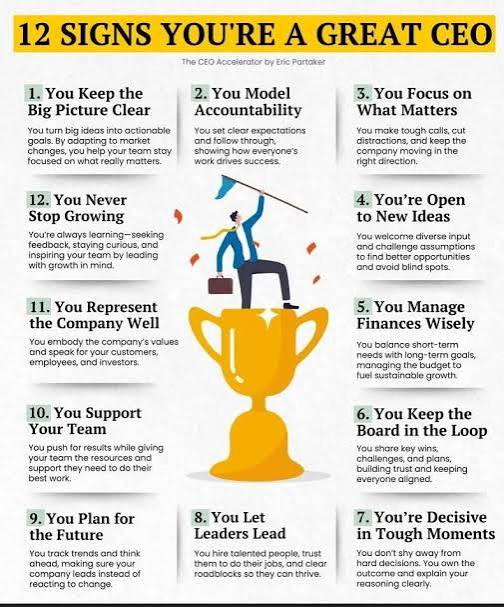
Great CEOs understand that building a successful company is about much more than making decisions, increasing revenue, or launching new products. Leadership requires what great CEOs understand a deep understanding of people, a clear sense of strategy, and the ability to create sustainable growth. The strongest executives recognize that these three areas are closely connected. A company cannot grow effectively without the right people, and even talented teams need a focused strategy to turn ideas into results.
Understanding what great CEOs understand about people, strategy, and growth can provide valuable lessons for entrepreneurs, managers, and aspiring business leaders. Their approach often combines emotional intelligence, long-term thinking, adaptability, and disciplined execution.
People Are the Foundation of Every Business
Great CEOs know that employees are not simply resources used to complete tasks. They are individuals with different experiences, strengths, motivations, and ambitions. Successful leaders make an effort to understand what drives their teams and create an environment where people can perform at their best.
Strong communication is one of the most important parts of this process. Employees need to understand the company’s goals, their individual responsibilities, and how their work contributes to the bigger picture. CEOs who communicate clearly can reduce confusion and build greater trust throughout the organization.
Great leaders also understand the importance of listening. Employees working directly with customers, products, and daily operations often have valuable insights that senior executives may not see. By encouraging honest feedback, CEOs can discover problems earlier and identify opportunities that might otherwise be overlooked.
Culture Matters More Than Many Leaders Realize
A company’s culture influences how employees behave, communicate, solve problems, and respond to challenges. Great CEOs understand that culture is not created through slogans or posters. It develops through everyday leadership decisions.
When executives demonstrate accountability, respect, curiosity, and integrity, employees are more likely to adopt similar behaviors. On the other hand, inconsistent leadership can create uncertainty and weaken trust.
Successful CEOs therefore pay close attention to the behaviors they reward and tolerate. If innovation is important, employees should have opportunities to experiment and learn. If customer service is a priority, leaders must demonstrate that commitment through their own decisions.
Strategy Requires Focus
Another important lesson about what great CEOs understand is that strategy is not simply about having ambitious goals. Strategy requires deciding where the company will compete, how it will create value, and which opportunities deserve attention.
Businesses often face countless possibilities. A company could enter new markets, introduce products, change pricing, invest in technology, or pursue partnerships. However, trying to do everything at once can spread resources too thin.
Great CEOs understand the power of focus. They identify the opportunities that align with the company’s strengths and long-term objectives. They also recognize that saying no to certain opportunities can be just as important as saying yes to the right ones.
Great CEOs Think Long Term
Short-term performance matters, but exceptional CEOs do not allow immediate results to completely control their decisions. They consider how today’s choices will affect the company several years from now.
Long-term thinking can influence decisions about hiring, technology, customer relationships, product development, and brand reputation. A decision that produces quick profits but damages customer trust may not be a successful decision in the broader sense.
Great leaders balance immediate responsibilities with future opportunities. They understand that sustainable success is built through consistent decisions rather than temporary wins.
Adaptability Is Essential for Growth
Markets change constantly. Customer expectations evolve, competitors introduce new ideas, technology develops, and economic conditions can shift unexpectedly. Great CEOs understand that a strategy that worked yesterday may not work tomorrow.
Adaptability does not mean changing direction every time something becomes difficult. Instead, it means being willing to evaluate new information and adjust when necessary.
Effective leaders monitor market trends, listen to customers, study competitors, and examine business performance. When evidence shows that a change is needed, they act decisively rather than remaining attached to an outdated plan.
Growth Must Be Sustainable
Rapid growth can look impressive, but great CEOs understand that growth without strong foundations can create serious problems. Expanding too quickly may place pressure on employees, customer service, operations, and finances.
Sustainable growth requires systems that can support increasing demand. This may include better technology, stronger processes, effective training, and capable management teams.
Great CEOs also understand that growth is not measured only by revenue. Customer loyalty, employee development, operational efficiency, brand strength, and profitability can all contribute to a company’s long-term health.
Data and Experience Work Together
Modern businesses have access to enormous amounts of information. CEOs can use financial reports, customer feedback, market research, and performance metrics to make better decisions. However, numbers do not tell the entire story.
Great leaders combine data with experience and judgment. They use information to understand what is happening while considering the human and strategic factors behind the numbers.
For example, declining sales might indicate a pricing issue, a changing customer preference, stronger competition, or a problem with the product itself. Data can identify the problem, but leadership is required to determine the appropriate response.
Strong Leaders Build More Leaders
One of the clearest characteristics of exceptional CEOs is their ability to develop other leaders. They understand that a company cannot depend on one individual for every important decision.
Instead, they build capable teams and give talented employees opportunities to take responsibility. Delegation allows CEOs to focus on major strategic priorities while helping employees develop valuable leadership skills.
Companies become stronger when decision-making is distributed across capable teams. This creates resilience and ensures that the organization can continue performing effectively as it grows.
Failure Can Become a Learning Tool
Great CEOs do not expect every decision to produce the desired result. Businesses involve uncertainty, and some experiments will fail.
The difference lies in how leaders respond. Instead of automatically blaming individuals, strong CEOs examine what happened, identify lessons, and improve future decisions.
A healthy attitude toward failure encourages responsible experimentation. Employees become more willing to suggest ideas when they know that reasonable mistakes can become opportunities for learning.
The Real Meaning of Sustainable Success
Ultimately, what great CEOs understand is that lasting success comes from connecting people, strategy, and growth. A strong strategy needs talented people to execute it. Talented people need a healthy culture and clear direction. Growth requires both effective strategy and a capable organization.
The best CEOs therefore look beyond immediate achievements. They build trust, develop people, maintain strategic focus, adapt to change, and create systems that allow the organization to improve over time.
Leadership is not simply about being the person at the top of a company. It is about creating an environment where people can succeed, customers receive genuine value, and the business can continue evolving. CEOs who understand these principles are better positioned to build organizations that are not only successful today but also prepared for the challenges and opportunities of tomorrow.